Table of Contents

Choosing AML software in the Philippines is no longer only about checking names against a sanctions list. Banks, fintechs, payment providers, insurers and other covered institutions increasingly need technology that can connect customer risk, sanctions screening, transaction activity, investigations and regulatory reporting.
Philippine AML rules also place clear expectations on monitoring. The AMLC’s implementing rules state that covered persons considered complex should maintain electronic AML/CFT systems capable of detecting covered or suspicious transactions, while automated functionality should include transaction and watchlist screening.
That makes the choice of an anti money laundering software provider an operational decision as much as a compliance one.
In this article, we compare 10 AML software providers that Philippine financial institutions can evaluate in 2026, along with the capabilities that matter most when choosing an AML platform.
What Should AML Software in the Philippines Include?
Before comparing providers, it helps to define the capabilities a modern financial crime system should actually support.
Capability | Why it matters |
|---|---|
Customer risk assessment | Helps apply risk-based AML controls |
Sanctions and PEP screening | Identifies higher-risk customers and counterparties |
Watchlist screening | Supports ongoing monitoring against relevant risk lists |
Transaction monitoring | Detects unusual or potentially suspicious activity |
Alert investigation | Helps analysts review evidence and document decisions |
Case management | Connects alerts, investigations and escalation |
Regulatory reporting | Supports information needed for STR/CTR workflows |
Integration | Connects AML controls with customer and transaction data |
This matters particularly in the Philippines because AMLC continues to issue targeted financial sanctions notices and reporting requirements, making timely screening and monitoring an ongoing operational requirement.
For a broader regulatory overview, see ZIGRAM’s Philippines AML compliance page.
1. ZIGRAM
ZIGRAM’s Complete AML System brings together customer risk rating, name screening, sanctions and global watchlist screening, PEP and adverse-media screening, transaction monitoring software, case management and investigations within a connected AML workflow.
Its modular structure can be useful for institutions that want to deploy individual AML tools first and connect them over time rather than replace the entire technology stack at once.
For organisations evaluating a connected approach to AML compliance, ZIGRAM is particularly relevant where customer risk, screening and transaction activity need to feed into the same investigation workflow.
ComplyAdvantage offers its Mesh financial-crime platform across customer screening, ongoing monitoring, payment screening and transaction monitoring.
Its screening capabilities cover sanctions, watchlists, PEPs, adverse media and enforcement data, while its transaction-monitoring capabilities combine configurable detection with automated workflows that help organizations comply with AML rules.
NICE Actimize is a long-established financial-crime technology provider with solutions across transaction monitoring, sanctions screening and investigations.
Its Suspicious Activity Monitoring platform uses rules, analytics and machine learning to identify potentially suspicious activity, while its WL-X solution covers sanctions and other watchlist-screening use cases. It is often considered where institutions need enterprise-scale monitoring and sophisticated investigation capabilities.
4. SAS
SAS Anti-Money Laundering provides a broad AML technology stack covering transaction monitoring, customer due diligence, watchlist screening, investigation management and regulatory reporting.
The platform combines rules, analytics, entity resolution and AI/ML capabilities to identify unusual behaviour and hidden relationships. SAS may be particularly relevant for large institutions with complex datasets and advanced analytics requirements.
5. Napier AI
Napier AI Continuum combines client screening, transaction screening, transaction monitoring, customer risk assessment and investigation workflows.
Its platform emphasises configurable rules, explainable AI and screening across sanctions, PEPs and adverse media. Napier can be attractive to banks, payments firms and other institutions looking for a modular platform that can be integrated with an existing compliance stack.
6. Tookitaki
Tookitaki’s FinCense platform combines transaction monitoring, customer risk scoring, screening, fraud prevention, alert prioritisation and case management.
Its AML transaction monitoring approach combines typology-led detection with AI, while screening covers PEPs, sanctions and adverse-media watchlists.
Its strong APAC positioning may make it relevant to institutions looking for regional financial-crime typologies and flexible AML workflows.
LexisNexis Risk Solutions provides AML and financial-crime technology focused heavily on risk intelligence, sanctions, PEPs, adverse media and screening.
Products such as Compliance Lens and Bridger Insight XG combine global risk data, matching technology and filtering designed to improve risk visibility, reduce false positives, and support adverse media monitoring that can generate real-time alerts for compliance.
LSEG World-Check is widely used for KYC, AML, sanctions and third-party risk screening.
Its data covers sanctions, PEPs, enforcement information, adverse media and related financial-crime risks, supporting regulatory compliance across sanctions, AML, and third-party risk screening, with access through screening software, APIs and data feeds.
For Philippine institutions focused primarily on sanctions screening, PEP screening and customer-risk intelligence, World-Check can form an important part of the broader AML technology stack, and LSEG is often evaluated as a global provider of risk intelligence data.
9. Sumsub
Sumsub combines identity and business verification with AML screening, ongoing monitoring and transaction monitoring.
Its AML screening covers sanctions lists, PEPs, watchlists and adverse media, while its transaction-monitoring tools support configurable rules, behavioural analysis and case management.
This integrated approach may appeal to digital-first fintechs and platforms seeking to connect onboarding and post-onboarding monitoring.
Oracle’s Financial Crime and Compliance Management (FCCM) suite covers KYC, customer screening, transaction monitoring software, investigations, case management and regulatory reporting.
Its platform includes configurable monitoring scenarios, behavioural analytics, graph intelligence and machine-learning capabilities for large-scale financial-crime programmes. Oracle may be most suitable for institutions with enterprise-scale operations and complex integration requirements.
How Should Philippine Institutions Compare AML Providers?
There is no single platform that will suit every financial institution
A bank processing millions of transactions has different requirements from a fintech, remittance business, insurer, credit unions or digital wallet. A useful evaluation should therefore ask:
Can the platform support Philippine AML requirements and help with AMLC registration and ongoing compliance obligations? Look at local rule configuration, screening lists, STR/CTR workflows and auditability, while making sure the platform can support compliance with anti money laundering regulations, broader regulatory requirements, and related regulatory obligations.
How strong is its transaction monitoring? Check whether monitoring rules can incorporate customer behaviour, velocity, counterparties, historical activity and transaction patterns rather than relying only on fixed thresholds.
Can screening and monitoring work together? A sanctions or PEP result should be capable of influencing customer risk and subsequent monitoring.
How much control does the compliance team have? Rules, thresholds and workflows should be configurable without excessive dependence on engineering teams, which helps with maintaining compliance over time.
Can analysts explain the outcome? AI and automation are useful only when investigators can understand and defend the decisions produced. False positives in AML software are harmless transactions flagged as suspicious.
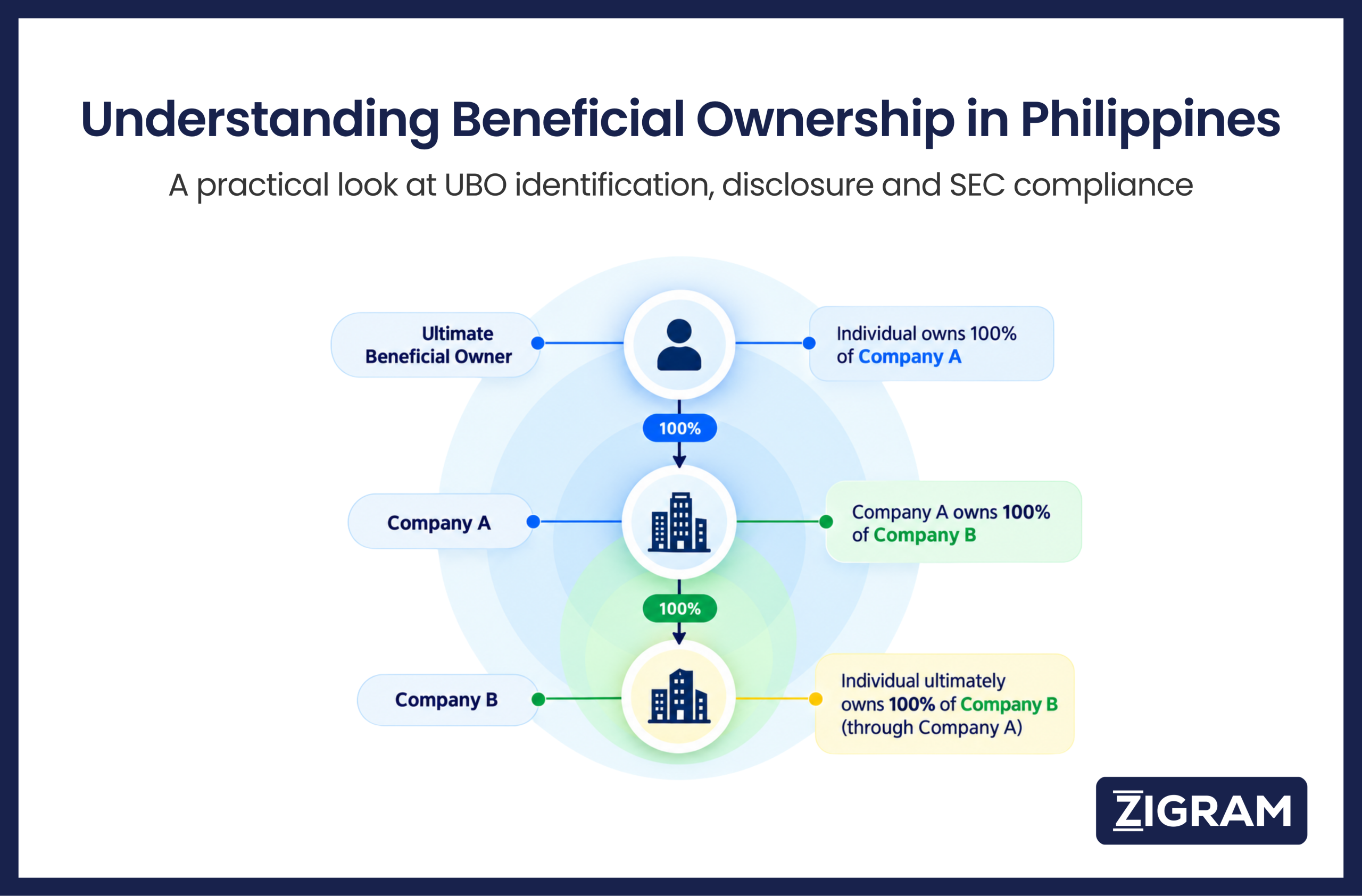
Philippine institutions should also ensure their AML technology can keep pace with changing customer structures. ZIGRAM’s guide to beneficial ownership in the Philippines explains why ownership information should feed into screening and customer-risk assessment. Global benchmarks often reference regulations such as the Bank Secrecy Act and FATF guidelines.
Choosing the Right AML Software in 2026
The best AML software is not necessarily the AML solutions suite with the longest feature list.
The stronger question is whether the system can help the institution connect: Customer risk → Screening → Transaction monitoring → Investigation → Reporting
For Philippine financial institutions, that connection is becoming increasingly important as financial crime moves across customers, accounts, payments and ownership structures.
The right system should therefore reduce fragmentation, make suspicious activity easier to investigate, and give AML compliance teams a clear record of why each decision was made so they can mitigate risks, improve operational efficiency, and strengthen financial crime prevention. That is what separates a collection of AML tools from a working AML compliance system, with risk scores and case management tools helping investigators prioritize work and resolve suspicious activity more efficiently.
FAQs
What is AML software?
AML software helps financial institutions identify, monitor and investigate potential money-laundering and financial-crime risks through capabilities such as screening, transaction monitoring, customer risk assessment and case management.
Which AML software features are most important in the Philippines?
Important capabilities include sanctions and PEP screening, watchlist screening, transaction monitoring, customer risk assessment, alert investigation, case management and regulatory-reporting support, along with features that help reduce compliance risks during onboarding and ongoing monitoring. Some platforms, such as AML Track, integrate with international databases for sanctions screening.
Does AMLC approve specific AML software vendors?
AMLC sets compliance requirements, but institutions remain responsible for selecting technology appropriate to their own obligations, risks and operating model.
What is the difference between sanctions screening and transaction monitoring?
Sanctions screening checks customers, counterparties or payments against relevant risk lists. Transaction monitoring analyses behaviour and transaction patterns, often using risk scores to prioritise alerts and improve investigations. Effective monitoring and screening also help identify suspicious patterns across customer and payment behaviour.
Should banks use one AML platform or multiple AML tools?
Either model can work. The key issue is whether risk information moves effectively between customer-risk, screening, monitoring and investigation systems so analysts have a complete view of the case; whichever model is used, integrated adverse media screening tools and case workflows improve overall risk visibility and help AML compliance teams investigate alerts more efficiently.