Table of Contents

Information current as of 2 November 2026
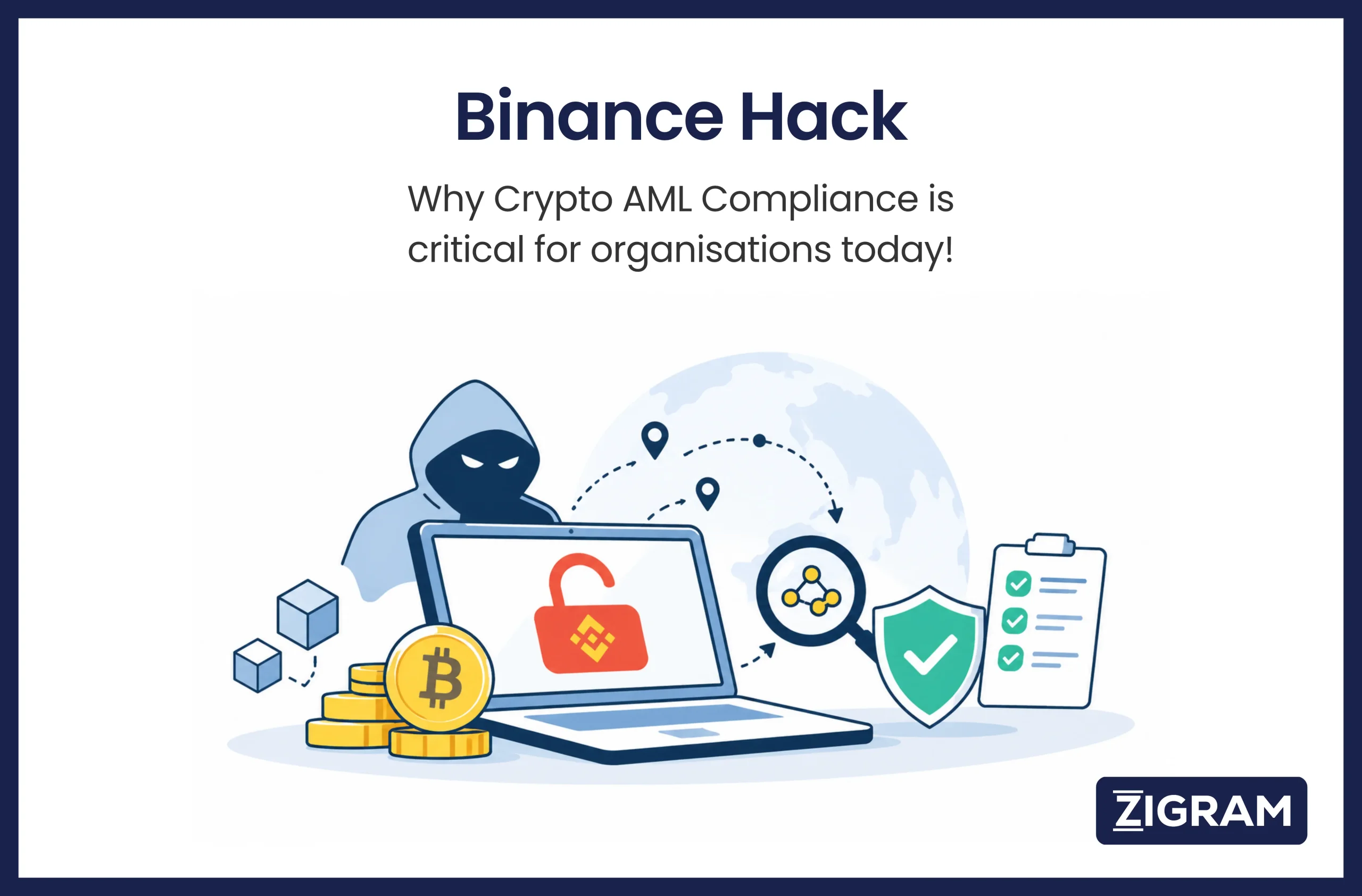
A major cryptocurrency exchange hack is more than a cybersecurity incident. It can rapidly become a financial crime emergency involving stolen digital assets, cross-border fund movements, sanctions exposure, money laundering, and the challenge of identifying and disrupting illicit financial networks.
The Binance hack of 29 October 2026 demonstrates why crypto AML compliance must extend beyond customer onboarding and conventional transaction monitoring. Effective controls require coordinated incident response, timely intelligence, risk-based monitoring, and cooperation between cryptocurrency exchanges, virtual asset service providers (VASPs), banks, regulators, and law enforcement.
Although Binance has committed to covering the financial impact of the stolen assets, the incident highlights a broader question for compliance leaders: How can financial institutions identify, investigate, and respond to illicit crypto flows before stolen assets become difficult to recover?
Key Takeaways
The Binance security incident occurred on 29 October 2026 and involved approximately $6.3 billion in unauthorized withdrawals, according to Binance.
Binance initially reported that industry partners had frozen approximately $3 billion in affected assets on-chain.
Binance subsequently reported replacing approximately 95% of the impacted amount using company resources. This is separate from recovering stolen cryptocurrency.
The FBI attributed the theft to North Korea’s TraderTraitor group in its 31 October announcement.
Crypto money laundering risks include rapid transfers, cross-chain activity, decentralized services, and conversion through fiat off-ramps.
Exchanges and VASPs need coordinated cybersecurity, fraud, AML, sanctions, and investigations capabilities.
A risk-based crypto AML framework combines customer due diligence, transaction monitoring, screening, intelligence, escalation, and continuous testing.
What Happened in the Binance Hack?
On 29 October 2026, Binance experienced a security incident involving unauthorized withdrawals from its hot wallets. In its 30 October incident update, Binance reported an estimated loss of approximately $6.3 billion in token assets.
Binance’s initial investigation indicated that the incident may have involved a compromised DevOps engineer’s laptop, which enabled an attacker to access a service container and submit unauthorized withdrawal transactions. Binance stated that it had found no evidence of wallet private-key leakage and would publish a detailed technical post-mortem after completing its investigation.
The exchange also reported that it had worked with blockchain partners to freeze approximately $3 billion in affected assets on-chain.
The incident prompted Binance to temporarily suspend withdrawals while security checks were conducted. Deposits remained operational, and Binance stated that it would absorb the financial impact rather than pass losses to users.
What is known about the recovery?
Binance’s recovery updates distinguish between frozen assets and replacement funds:
Frozen assets: Approximately $3 billion in affected assets had been frozen on-chain through cooperation with industry partners.
Replacement of affected balances: Binance reported that it had set aside more than $6.34 billion in company resources to cover the losses.
Replenishment progress: Binance reported covering approximately 90% of the impacted amount on 31 October and approximately 95% by 1 November.
Service restoration: Binance began resuming withdrawals in phases on 1 November following security assessments.
These figures describe different activities. Frozen assets relate to efforts to restrict the movement of stolen funds. Replenishment refers to Binance using its own resources to replace affected assets and cover user balances.
The 1 November recovery update stated that the remaining 5% consisted of less-liquid tokens that were taking longer to source.
The FBI subsequently attributed the theft to North Korea’s TraderTraitor group. Binance’s technical investigation and post-incident report remain important for understanding the precise attack path and safeguards that failed. FBI attribution reporting
Why Crypto Exchange Hacks Create AML Risks
A cryptocurrency theft becomes an AML concern when stolen assets begin moving through financial systems and services that may enable concealment, conversion, or eventual use.
Unlike conventional bank transfers, cryptocurrency transactions can move across blockchain networks and jurisdictions without relying on a single intermediary. Although blockchain transactions are often publicly visible, identifying the individuals or entities controlling addresses can be difficult.
1. Rapid movement of stolen assets
Attackers may transfer assets through multiple addresses shortly after a theft. The speed and volume of transactions can overwhelm manual investigations and create a narrow window for intervention.
2. Pseudonymous transactions
Blockchain addresses do not inherently reveal the identity of their owners. Investigators must combine transaction data with exchange records, customer information, intelligence, and other evidence to establish attribution.
3. Cross-border complexity
Crypto transactions can involve exchanges, service providers, and counterparties across several jurisdictions. Differences in regulatory coverage, information-sharing practices, and investigative powers can delay coordinated responses.
4. Exposure through financial intermediaries
Exchanges, VASPs, banks, payment providers, and other financial institutions may encounter stolen assets as they move through the ecosystem.
This creates a need to distinguish direct exposure to a known theft from indirect or historical exposure, while assessing whether activity is suspicious and whether escalation or reporting is required.
How Stolen Cryptocurrency May Be Laundered
The following are general crypto money laundering typologies. They should not be interpreted as confirmed methods used in the Binance incident unless supported by investigative findings.
Typology | AML risk and indicators |
|---|---|
Layering through multiple wallets | Rapid transfers across connected addresses may obscure the transaction trail. |
Chain hopping | Assets move between blockchain networks, complicating monitoring across separate environments. |
Decentralized exchange swaps | Swapping assets through decentralized services may introduce additional counterparties and transaction patterns. |
Mixers and obfuscation services | Services designed to obscure transaction links can increase tracing complexity and risk exposure. |
Mule accounts and intermediaries | Third parties may receive or convert assets on behalf of criminals, creating customer and counterparty risk. |
Fiat off-ramps | Conversion through exchanges, brokers, or payment providers can connect illicit crypto proceeds with conventional financial systems. |
No single indicator proves that funds are illicit. Compliance teams should evaluate transaction patterns alongside customer profiles, source-of-funds information, wallet exposure, sanctions intelligence, and the surrounding circumstances.
Key AML Challenges for Crypto Exchanges and VASPs
Real-time transaction monitoring
Crypto activity can occur continuously, across multiple networks and at high speed. Monitoring systems must identify unusual transaction behaviour while supporting timely investigation and escalation.
Wallet and counterparty risk assessment
Exchanges need processes to evaluate exposure to suspicious addresses, high-risk services, sanctioned entities, and potentially illicit counterparties. Attribution must be supported by reliable intelligence rather than assumptions based solely on transaction proximity.
Rapidly evolving typologies
Criminals adapt their methods in response to new controls. AML teams must regularly update scenarios, risk indicators, and investigative procedures as new threats emerge.
False positives and alert prioritization
High transaction volumes can generate large numbers of alerts. Poorly calibrated controls may overwhelm investigators or delay action on higher-risk activity.
Customer and beneficial ownership identification
VASPs must understand who their customers are, who ultimately controls relevant entities, and whether activity aligns with the customer’s expected risk profile.
Sanctions screening and suspicious activity reporting
Potential exposure to sanctioned persons or entities requires timely assessment under applicable laws. Suspicious activity must be escalated and reported in accordance with relevant jurisdictional requirements.
Information sharing
A single institution may see only part of a suspicious transaction chain. Effective responses depend on lawful, timely cooperation between exchanges, blockchain intelligence providers, banks, regulators, and law enforcement.
What AML and Compliance Teams Should Learn
The Binance hack provides several practical lessons for financial crime compliance leaders.
1. Review theft-related monitoring scenarios
Assess whether monitoring controls can identify unusual withdrawal patterns, sudden changes in transaction behaviour, and activity inconsistent with customer profiles.
2. Strengthen escalation procedures
Establish clear processes for handling suspected stolen assets, including rapid escalation to AML, security, fraud, legal, and investigations teams.
3. Reassess customer and transaction risk
When new intelligence emerges, reassess affected customers, counterparties, and transactions. Risk ratings should reflect changing circumstances rather than remain static.
4. Improve cross-functional coordination
Cybersecurity teams may identify the initial compromise, while AML teams assess financial flows and suspicious activity. These functions should operate through coordinated incident-response procedures.
5. Preserve evidence and audit trails
Document alert decisions, investigative findings, risk assessments, communications, and escalation actions. Accurate records support regulatory scrutiny and ongoing investigations.
6. Test controls against evolving typologies
Use scenario testing, historical cases, and emerging-risk intelligence to assess whether controls can identify relevant patterns without generating excessive false positives.
No single control can prevent every crypto-related crime. Effective compliance depends on layered safeguards, timely intelligence, and the ability to adapt.
Building a Risk-Based Crypto AML Framework
A risk-based framework allows organizations to allocate resources according to their business model, exposure, jurisdiction, customer base, and regulatory obligations.
A practical framework includes six interconnected components:
Customer and entity due diligence: Identify customers, beneficial owners, business activities, and expected transaction behaviour.
Risk-based screening and ongoing review: Screen relevant individuals and entities against applicable sanctions, watchlists, and risk indicators.
Transaction monitoring and investigation: Detect unusual activity, investigate alerts, and escalate potentially suspicious transactions.
Adverse media and emerging-risk intelligence: Incorporate relevant news and intelligence into customer and counterparty risk assessments.
Suspicious activity escalation and reporting: Apply documented procedures for internal escalation and regulatory reporting.
Governance and continuous improvement: Test controls, review typologies, document decisions, and update procedures as risks evolve.
For crypto businesses, this framework should be supported by appropriate blockchain analytics and wallet-risk capabilities where required. These specialized capabilities complement, rather than replace, conventional AML controls.
The Role of RegTech in Strengthening Financial Crime Compliance
RegTech solutions can help organizations improve the efficiency, consistency, and scalability of financial crime compliance operations.
Within a broader compliance ecosystem, ZIGRAM’s solutions support several relevant functions:
Transact Comply: Supports transaction monitoring to identify potentially suspicious customer activity.
PreScreening.io: Supports AML and related risk screening of individuals and companies.
Due Diliger: Provides due-diligence research and risk context to support investigations and decision-making.
Dragnet Alpha: Supports news monitoring and emerging-risk intelligence.
These capabilities can contribute to customer risk assessment, monitoring, screening, and investigative workflows. They are components of a broader compliance framework and should be combined with appropriate crypto-specific tracing, analytics, and investigative capabilities where needed.
Looking Ahead: Crypto AML in a More Connected Financial System
The Binance incident reinforces the importance of cooperation across the digital-asset ecosystem.
The Financial Action Task Force (FATF), in its 16 July 2026 targeted update, reported that 83% of surveyed jurisdictions had passed legislation implementing the Travel Rule, up from 73% in 2025. However, significant gaps remain in implementation, supervision, and enforcement.
FATF also highlighted risks involving stablecoins, offshore VASPs, unhosted wallets, and decentralized finance arrangements.
For compliance leaders, the priorities are clear:
Strengthen risk-based supervision and monitoring.
Improve information sharing between public and private stakeholders.
Enhance the ability to identify, freeze, and seize illicit assets lawfully.
Ensure controls can adapt to new transaction patterns and emerging threats.
Coordinate AML, cybersecurity, fraud, and investigations teams.
As digital assets become more integrated with the wider financial system, effective crypto AML compliance will depend on connecting customer intelligence, transaction monitoring, regulatory obligations, and coordinated response capabilities.
Frequently Asked Questions
What is the Binance hack?
The Binance hack was a security incident on 29 October 2026 involving approximately $6.3 billion in unauthorized withdrawals from the exchange’s hot wallets, according to Binance. The FBI attributed the theft to North Korea’s TraderTraitor group.
Why are crypto exchange hacks an AML concern?
Stolen cryptocurrency can be transferred rapidly through wallets, exchanges, and other services, creating risks of laundering, sanctions exposure, and illicit conversion. AML teams must identify suspicious flows and coordinate with relevant institutions and authorities.
How can stolen cryptocurrency be laundered?
General typologies include layering through multiple wallets, chain hopping, decentralized exchange swaps, obfuscation services, mule accounts, and fiat off-ramps. These methods should not be attributed to a specific incident without supporting evidence.
What is crypto transaction monitoring?
Crypto transaction monitoring is the process of reviewing digital-asset activity to identify potentially suspicious transactions and patterns. It supports risk assessment, investigation, escalation, and regulatory reporting.
What should crypto exchanges do when they detect exposure to stolen funds?
Exchanges should assess the exposure, escalate it through AML and security procedures, preserve relevant records, and take appropriate action under applicable laws and policies. They should coordinate with relevant counterparties and authorities where legally permitted.
How can AML teams manage risks from cross-chain transactions?
AML teams should combine appropriate blockchain analytics with customer due diligence, transaction monitoring, counterparty risk assessment, and investigative intelligence. Cross-chain exposure should be assessed in context rather than treated as proof of illicit activity.
What role do VASPs play in preventing crypto money laundering?
VASPs help prevent money laundering through customer due diligence, transaction monitoring, sanctions screening, suspicious activity reporting, and cooperation with authorities. Their controls are particularly important where illicit assets interact with regulated financial services.
Conclusion
The Binance hack demonstrates that crypto AML compliance is not simply a matter of screening customers or monitoring transactions in isolation. It requires coordinated controls that connect customer risk, transaction behaviour, emerging intelligence, investigations, and regulatory obligations.
For exchanges, VASPs, banks, and compliance leaders, the lasting lesson is to build adaptable, risk-based frameworks that can respond quickly to suspicious activity while supporting effective cooperation across the financial system.