Fraud Strategy 2026–2029: What AML Leaders Must Know About the UK’s System-Wide Crackdown on Fraud
Fraud is no longer just a financial crime issue—it is now a national security threat, economic disruptor, and systemic risk. The UK Government’s Fraud Strategy 2026–2029 represents one of the most comprehensive anti-fraud frameworks globally, combining regulatory reform, public-private collaboration, and technological intervention.
For AML compliance leaders, this strategy signals a fundamental shift from reactive compliance to proactive fraud prevention ecosystems.
The Scale of the Fraud Crisis: A Systemic Threat
The report highlights the unprecedented scale of fraud in the UK, underscoring why financial institutions must rethink AML frameworks.
- Fraud is the largest reported crime category in England and Wales
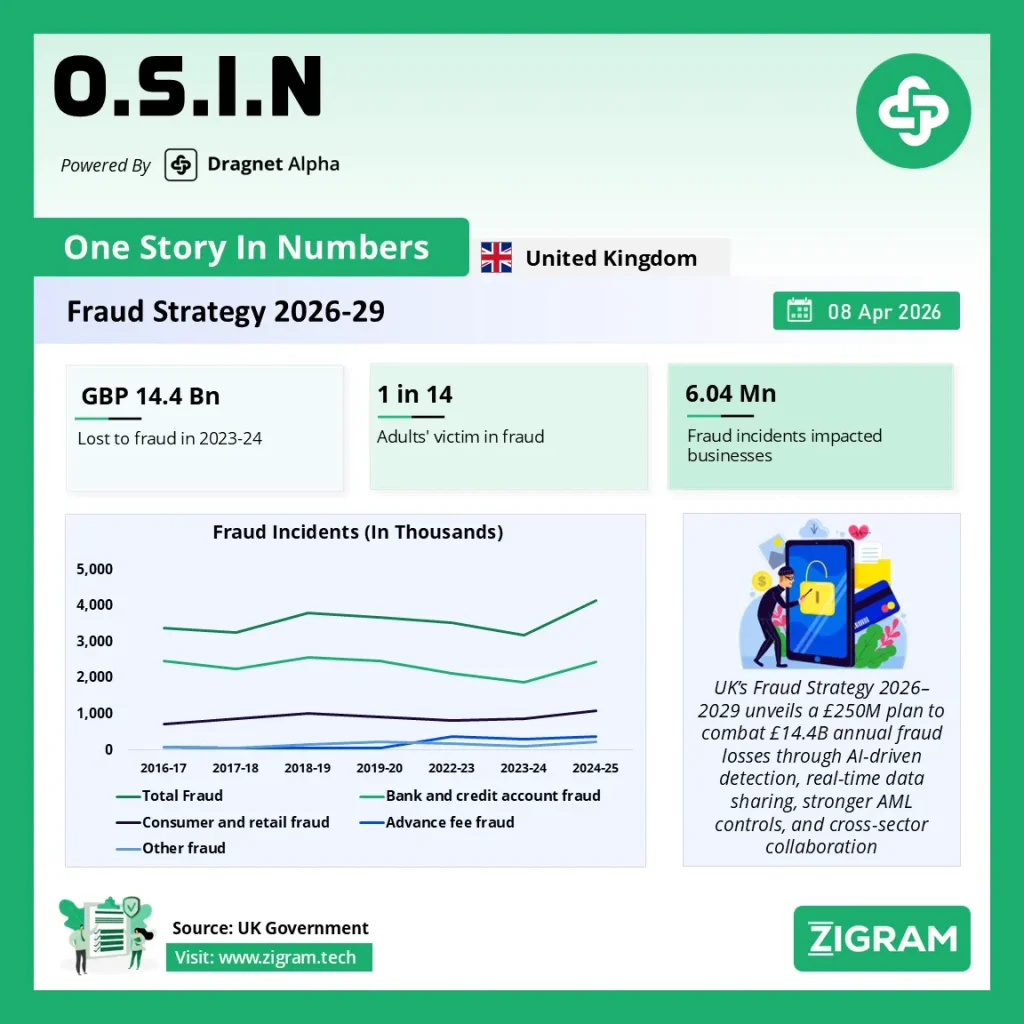
- £14.4 billion lost to fraud in 2023–2024
- 4 million fraud offences annually (year ending Sept 2025)
- Fraud accounts for 45% of all crime
- 1 in 14 adults are victims of fraud
- 1 in 4 businesses experienced fraud in the past year (~389,000 businesses)
- 6.04 million fraud incidents impacted businesses
Financial impact is only one dimension. The report reveals:
- 74% of fraud cases involve financial loss, with ~75,000 cases exceeding £10,000
- 92% of victims suffer emotional or mental harm
For AML professionals, this reinforces a key reality:
👉 Fraud is no longer downstream of AML—it is deeply interconnected with money laundering, cybercrime, and organized crime networks.
The Evolution of Fraud: Technology, Scale, and Industrialisation
The strategy identifies fraud as a technology-enabled, transnational crime.
Key Drivers:
- Industrialised Fraud Ecosystems
- Fraud is now run through scam compounds and call centres
- Linked to human trafficking, corruption, and organized crime networks
- Operates globally, often beyond jurisdictional reach
- Fraud-as-a-Service Economy
- Dark web marketplaces sell:
- Phishing kits
- Stolen credentials
- Fraud automation tools
- AI-Driven Fraud
- Use of:
- Deepfakes
- Voice cloning
- Generative AI phishing
- Platform Exploitation
- 53% of APP fraud originates via social media and communication platforms
- Crypto & Cross-Border Laundering
- Crypto increasingly used for:
- Fraud proceeds laundering
- Cross-border transfers
- Obfuscation of financial trails
The Strategic Framework: DISRUPT – SAFEGUARD – RESPOND
The UK’s approach is built on three pillars, each with direct AML implications.
- DISRUPT: Attacking Fraud at the Infrastructure Level
This pillar marks a shift from detecting fraud to preventing it at source.
Key Initiatives
Online Crime Centre (OCC)
- £31 million investment
- Launch: 2026
- Combines:
- Financial institutions
- Telecom providers
- Tech companies
- Law enforcement
Capabilities:
- Real-time data sharing
- Fraud pattern detection
- Account freezing & website takedowns
👉 For AML teams:
This signals mandatory data collaboration ecosystems, not siloed compliance.
Telecom & Digital Infrastructure Controls
- Over 1 billion fraudulent texts blocked since 2022
- Planned:
- Stronger KYC for telecom access
- Central phone number registry
- AI-driven fraud detection
Financial System Controls
- £629.3 million stolen in H1 2025 alone
- £371.8 million from unauthorised fraud
- 2.6 million bank fraud cases (+19% YoY)
Regulatory Shifts:
- Mandatory APP fraud reimbursement (88% recovery rate)
- Repeal of static Strong Customer Authentication rules
- Push toward:
- Risk-based authentication
- Passkeys (phishing-resistant login systems)
👉 AML implication:
Authentication = new frontline AML control
Crypto Regulation
- Full FCA authorization required by 2027
- Crypto firms treated like traditional financial institutions
👉 Signals convergence of crypto compliance and AML regimes
- SAFEGUARD: Building Systemic Resilience
This pillar focuses on preventing victimisation before transactions occur.
Key Measures
Behavioural Defence Systems
- Expansion of “Stop! Think Fraud” campaign
- Integration with banks, telecoms, and platforms
Data-Driven Risk Targeting
- Use of:
- Fraud hotspot modelling
- Predictive analytics
- Example:
- Operation Callback reduced fraud losses by 67%
Education & Vulnerability Reduction
- Fraud education embedded in school curriculum
- Targeting:
- Youth (high digital exposure)
- Elderly (financial exploitation risk)
👉 AML Insight:
This reflects a shift toward “pre-transaction AML”—identifying risk before money moves.
- RESPOND: Victim-Centric Enforcement & Justice
This pillar aligns fraud enforcement with AML investigation and recovery frameworks.
Key Measures
- Launch of “Report Fraud” platform (2026)
- Fraud Victims Charter (2027)
- Enhanced:
- Civil penalties
- Criminal prosecutions
- Asset recovery frameworks
👉 For AML teams:
Expect tighter integration between:
- Fraud reporting
- Suspicious Activity Reports (SARs)
- Law enforcement workflows
Corporate Transparency & AML Convergence
The strategy strongly aligns with AML/KYC reforms:
Companies House Reform
- Mandatory identity verification
- Power to:
- Remove fraudulent entities
- Share intelligence
New Corporate Offence
- “Failure to Prevent Fraud” (effective 2025)
👉 This mirrors:
- Failure to prevent bribery (UKBA)
- Failure to prevent tax evasion
Critical AML Takeaways
- Fraud = AML Risk Multiplier
Fraud is directly funding:
- Money laundering
- Terror financing
- Organized crime
- Data Sharing Will Become Mandatory
The OCC and regulatory push signal:
- End of siloed compliance
- Rise of real-time intelligence ecosystems
- KYC is Expanding Beyond Banking
Now includes:
- Telecom providers
- Social platforms
- Crypto firms
- AI is a Double-Edged Sword
- Criminals use AI for fraud
- Regulators expect AI for detection
- Prevention > Detection
The biggest shift:
👉 From transaction monitoring → to fraud prevention architecture
Final Thought: The Future of AML is Fraud-Centric
The UK Fraud Strategy 2026–2029 is not just a policy document—it is a blueprint for the future of financial crime compliance.
It clearly signals the following:
- AML frameworks must evolve into real-time, intelligence-led systems
- Fraud prevention will become a core regulatory expectation
- Collaboration across sectors is no longer optional
For AML leaders, the message is direct:
👉 If your compliance framework is not actively preventing fraud, it is already outdated.
- #FraudStrategy
- #AMLCompliance
- #FinancialCrime
- #FraudPrevention
- #RegTech
- #CyberCrime
- #MoneyLaundering
- #KYC
- #RiskManagement
- #FinCrime
- #ComplianceLeaders
- #AIinFinance
- #CryptoRegulation
- #DigitalFraud
- #EconomicCrime