The FATF Grey List June 2026 update has reshaped the global compliance landscape, with Iraq and Bosnia and Herzegovina added to the list of jurisdictions under increased monitoring and Algeria and Namibia removed.
The June 2026 FATF Plenary has reshaped the global compliance landscape. On 19 June 2026, the Financial Action Task Force updated its grey list and reaffirmed the blacklist, triggering immediate consequences for risk assessments, customer onboarding, and transaction monitoring across regulated industries worldwide. Here is everything compliance teams need to know, including the full list of 22 grey-listed countries, what changed, and how to operationalise these updates.
Quick Summary: FATF Grey List Changes in June 2026
The FATF Plenary concluded on 19 June 2026 with material changes to the FATF grey list that demand swift action from financial institutions and compliance teams globally.
On 19 June 2026, the Financial Action Task Force (FATF) added Iraq and Bosnia and Herzegovina to the grey list, officially known as “jurisdictions under increased monitoring,” after identifying strategic deficiencies in their anti money laundering, counter-terrorist financing, and counter-proliferation financing frameworks.
Simultaneously, Algeria and Namibia were removed from the grey list after both countries completed their FATF action plan commitments and passed on-site inspections confirming operational reforms in supervision, asset recovery, and beneficial ownership transparency.
Following these changes, there are now 22 FATF grey list countries as of 19 June 2026. The FATF blacklist (officially “High-Risk Jurisdictions subject to a Call for Action”) remains unchanged, still covering Iran, North Korea, and Myanmar. As of February 2026, three countries were on the FATF blacklist, and that number holds steady.
For compliance teams, these updates require immediate recalibration. Financial institutions must update country risk assessments, adjust enhanced due diligence workflows for counterparties linked to newly listed jurisdictions, and reconfigure transaction monitoring rules. Failing to reflect the latest FATF status in your risk framework creates regulatory exposure and reputational risk.
What Is the FATF and Why the Grey List Matters in 2026
The Financial Action Task Force (FATF) is the preeminent global standard-setter for combating money laundering, terrorist financing, and proliferation financing, composed of member jurisdictions and FATF-style regional bodies, and FATF member states are expected to implement the standards and responses agreed through the body. It establishes the AML/CFT/CPF guidelines known as the 40 Recommendations and evaluates countries’ effectiveness through 11 Immediate Outcomes.
After each plenary session, FATF publishes two critical documents: the list of high-risk jurisdictions subject to a call for action (the FATF blacklist) and the list of jurisdictions under increased monitoring (the FATF grey list), which FATF member states use to guide their controls toward listed jurisdictions. FATF meets three times a year – in February, June, and October – to update these lists and provide strategic direction on global financial crime controls.
The grey list is not an economic sanctions regime. It is a public signal that a jurisdiction has strategic AML/CFT deficiencies but is actively cooperating with the FATF and has committed to time-bound action plans to address them. Countries on the grey list are under increased monitoring by FATF. The grey list serves as a warning to global markets about compliance risks, and countries on it are actively working to improve their AML systems.
Financial institutions, designated non-financial businesses and professions (DNFBPs), and virtual asset service providers use FATF grey list status as an input into country risk scoring and customer risk rating under a risk-based approach. The FATF grey list identifies countries with strategic deficiencies in anti money laundering, and failure to adequately mitigate risks associated with terrorist financing can also lead to grey listing.
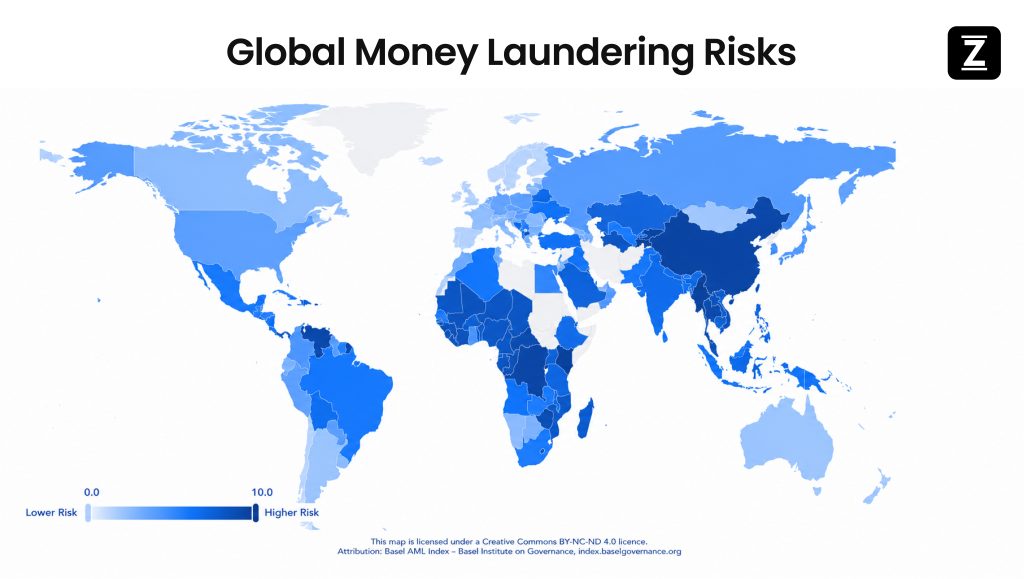
Outcome of the FATF Plenary – 19 June 2026
The June 2026 FATF Plenary, held 17–19 June, delivered the latest round of updates to FATF grey list and blacklist countries, reinforcing FATF’s role as the arbiter of global financial crime risk standards. Countries may be added to the grey list during FATF plenary sessions such as this one.
On 19 June 2026, FATF added Iraq and Bosnia and Herzegovina to the grey list. Both were identified as having serious strategic deficiencies across their AML, CFT, and proliferation financing controls. Bosnia and Herzegovina’s listing followed a MONEYVAL mutual evaluation that flagged fragmented governance, missing state-level legislation, and weak money laundering and terrorist financing investigations. Iraq’s listing reflected weak risk-based supervision of both financial institutions and DNFBPs, limited asset recovery capacity, and deficiencies in targeting terrorism financing and proliferation financing risks.
Algeria and Namibia were removed from the grey list after FATF on-site visits confirmed completion of their agreed action plans. Algeria demonstrated substantial improvements in risk-based supervision, beneficial ownership transparency, and implementation of targeted financial sanctions. Namibia showed enhanced legislative frameworks, stronger enforcement against financial crime, and improved investigations into complex money laundering cases.
There are now 22 jurisdictions on the FATF grey list. The FATF “blacklist” for high-risk jurisdictions subject to a call for action remains unchanged, covering Iran, North Korea (Democratic People’s Republic of Korea), and Myanmar. The June 2026 outcome also included updated guidance on asset recovery and continued focus on high-risk sectors, but the grey list changes carry the most immediate weight for compliance teams.
FATF Grey List Countries as of 19 June 2026 (22 Jurisdictions)
Below is the complete, alphabetised table of all 22 FATF grey list countries as of 19 June 2026. As of February 2026, 23 countries were on the FATF grey list; with two additions and two removals in June, the net count moved to 22. Kuwait and Papua New Guinea were newly added to the grey list in 2026 (February Plenary). Bosnia and Herzegovina and Iraq were added to the grey list in the June 2026 Plenary.
Jurisdiction | Date First Listed / Latest Change | Key Issues (AML/CFT/CPF) |
|---|---|---|
Angola | Pre-Feb 2026 | Weak risk-based supervision in non-bank sectors; deficient beneficial ownership transparency; low ML investigation rates |
Bolivia | Added Feb 2026 | Lagging STR enforcement; limited asset recovery; insufficient international cooperation; poor DNFBP supervision |
Bosnia and Herzegovina | Added – June 2026 Plenary | Missing state-level asset confiscation and targeted financial sanctions laws; no central beneficial ownership register; fragmented governance; limited ML/TF investigations |
Bulgaria | Pre-2026 | Weak PF/TF sanctions implementation; inconsistent STR reporting; supervision gaps |
Cameroon | Pre-2026 | Weak risk understanding, poor judicial capacity; DNFBP supervision gaps, and low prosecution volumes |
Côte d'Ivoire | Pre-2026 | Beneficial ownership transparency weak; delays in prosecuting ML; gaps in TF/PF targeted sanctions |
Democratic Republic of Congo | Pre-2026 | Enforcement weak; limited seizure/confiscation; cross-border cooperation low; non-profit sector vulnerable |
Haiti | Pre-2026 | Institutional capacity very limited; few prosecutions; supervision weak; beneficial ownership lacking |
Iraq | Added – June 2026 Plenary | Weak supervision (FIs and DNFBPs); limited asset recovery; proliferation financing risks emanating from gaps in sanctions implementation; weak ML/TF investigations |
Kenya | Pre-2026 | Uneven supervision; NPO oversight weak; delays in beneficial ownership registry; elevated cross-border TF risk |
Kuwait | Added Feb 2026 | Issues with beneficial ownership; supervision lapses; AML/CFT risk understanding and STR reporting need strengthening |
Lao PDR | Pre-2026 | Bearer shares; under-resourced financial intelligence unit; DNFBP supervision weak; virtual assets risk unaddressed |
Lebanon | Pre-2026 | Economic and political instability; weak TF oversight; poor asset recovery; sanctions implementation gaps |
Monaco | Pre-2026 | ML investigations limited in scale; supervision of non-resident wealth under scrutiny; high-value transactions weakly checked |
Nepal | Pre-2026 | Limited cross-border cooperation; DNFBP coverage gaps; low ML convictions |
Papua New Guinea | Added Feb 2026 | Geographic challenges, limited oversight of remote sectors, virtual assets risk emerging, and supervisory capacity weak |
South Sudan | Pre-2026 | Fragile governance, conflict zones hamper enforcement, FIU capacity low; non-profits highly at risk |
Syria | Pre-2026 | Major AML/CFT regime collapse; non-existent effective supervision; proliferation risk high |
Venezuela | Pre-2026 | Institutional corruption; weak enforcement; beneficial ownership opaque, and STRs under-utilized |
Vietnam | Pre-2026 | Technical gaps in CDD, PF, sanctions; VASP regulation nascent; capacity building needed |
Virgin Islands (UK) | Pre-2026 | Non-resident ownership high; gaps in supervision of corporate service providers; sanctions implementation uneven |
Yemen | Pre-2026 | Conflict; governance collapse; high TF/proliferation risk; financial system limited |
Removed in June 2026 Plenary: Algeria and Namibia were officially removed from the grey list. Algeria completed reforms in risk-based supervision and targeted financial sanctions. Namibia delivered legislative reforms, enhanced beneficial ownership frameworks, and improved financial crime enforcement. Both remain under monitoring through their respective fatf style regional bodies (MENAFATF and ESAAMLG).
FATF Blacklist (Call for Action) Countries as of June 2026
The fatf blacklist is officially termed “high risk jurisdictions subject to a call for action” and represents the highest level of FATF concern. The FATF blacklist includes countries with severe AML deficiencies where political will or capacity to reform remains critically insufficient. Blacklisted countries face international sanctions and transaction restrictions that go far beyond enhanced monitoring.
As of 19 June 2026, three countries remain on the fatf blacklist:
Iran continues to fail in criminalizing and prosecuting terrorist financing adequately, poses ongoing proliferation financing risks, and has not implemented targeted financial sanctions or ratified key international instruments. FATF calls on all jurisdictions subject to apply counter-measures.
North Korea (the democratic people’s republic of Korea) engages in systemic non-cooperation, state-sponsored illicit financial flows – including sanctions evasion, arms proliferation, and digital asset-based cybercrime – and operates without any credible action plan. The threat of weapons of mass destruction proliferation underpins these concerns.
Myanmar has seen a breakdown of AML/CFT institutional structures following the military takeover, with insufficient political commitment and widespread corruption. Ongoing money laundering and terrorist financing risks remain unaddressed.
Financial institutions dealing with entities or transactions linked to these blacklisted countries must apply the highest level of enhanced due diligence and, in many cases, avoid or exit relationships entirely. FATF’s call for action may include counter-measures, severe restrictions, and alignment with un security council resolutions and economic sanctions regimes such as OFAC. The June 2026 Plenary did not change the blacklist but reaffirmed the need for ongoing counter-measures against these high risk jurisdictions.
Grey List vs Blacklist: Practical Differences for Financial Institutions
Both the FATF grey list and FATF blacklist identify financial crime risks, but they differ sharply in severity, legal expectations, and operational impact for regulated entities. Understanding these differences is essential for any financial crime and compliance programme.
Grey list countries have strategic deficiencies but are cooperating with the FATF, following action plans, and are subject to increased monitoring rather than direct countermeasures. Being grey-listed reduces foreign direct investment inflows into affected countries, and grey listing negatively impacts a country’s global reputation. The FATF grey list can also deter potential new trade partnerships and result in lower financial inclusion for citizens of those jurisdictions. Grey listing impacts a country’s reputation and financial scrutiny across the board – from correspondent banking to trade finance to declining capital inflows.
Blacklist countries, by contrast, are deemed to have severe, ongoing deficiencies and a lack of sufficient political commitment. They face a call for action and, often, broad de facto isolation from the international financial system. Countermeasures are effectively mandatory.
For grey-listed jurisdictions, FATF does not automatically require enhanced due diligence but expects country risk and customer risk to be assessed using a risk-based approach that combines FATF status with other countries’ regulatory guidance, adverse media, and sector risk. In practice, most financial institutions treat grey-listed jurisdictions as higher risk. For blacklisted jurisdictions, enhanced due diligence and countermeasures are mandatory, with many global banks applying a near-total prohibition on relationships and transactions. The distinction shapes how you build your enhanced due diligence workflows.
What Changed on the FATF Grey List in June 2026
The net change in June 2026 was +2 / −2: Bosnia and Herzegovina and Iraq were added to the grey list, while Algeria and Namibia were removed, leaving 22 jurisdictions under increased monitoring.
Bosnia and Herzegovina was listed due to deficient legal frameworks at the state level specifically the absence of laws on asset confiscation and targeted financial sanctions. The country lacks a central beneficial ownership register, and its fragmented governance structure (Federation, Republika Srpska, Brčko District) creates uneven supervision. Bosnia had only 4 of the 40 FATF standards rated as fully compliant in its MONEYVAL mutual evaluation. Money laundering and terrorist financing investigations remain well below the levels expected given the risk profile.
Iraq faces persistent challenges in risk-based supervision of both financial institutions and DNFBPs, limited asset recovery capacity, and significant deficiencies in targeting terrorism financing and proliferation financing. Cross-border cooperation remains inadequate, and the financial intelligence unit lacks the resources and mandate to disseminate intelligence effectively.
Algeria was delisted after strengthening risk-based supervision over high risk sectors, improving its financial intelligence unit outputs, and implementing targeted financial sanctions for TF and PF. An on-site inspection confirmed these were not just legal reforms but operational realities.
Namibia was removed after approximately two and a half years on the grey list – consistent with the typical 2–4 year period. Its reforms included legislative improvements, enhanced beneficial ownership frameworks, and improved enforcement against serious and complex money laundering. Both Algeria and Namibia remain under monitoring through their regional fatf style regional bodies.
How FATF Adds and Removes Countries from the Grey List
FATF uses mutual evaluation reports to assess countries across two dimensions: technical compliance with the 40 Recommendations and effectiveness measured through 11 Immediate Outcomes. Countries are added to the grey list after mutual evaluations reveal significant deficiencies. FATF uses these mutual evaluation reports as the primary diagnostic tool.
Countries at risk of grey listing are typically those with multiple “non-compliant” or “partially compliant” ratings and poor effectiveness scores in critical areas like customer due diligence, supervision, international cooperation, and asset recovery. Deficient legal frameworks – such as missing beneficial ownership registers or absent targeted financial sanctions legislation – can directly lead to a country being placed on the fatf grey list.
A jurisdiction enters the grey list when FATF, after the MER and follow-up reviews, determines that strategic deficiencies persist and the country commits to a time-bound action plan. Grey-listed countries must commit to these time-bound action plans with clear milestones. Failure to adequately mitigate risks associated with terrorist financing can contribute to this listing.
Removal from the grey list requires a country to fully implement its action plan. Delisting requires substantial progress, after which FATF conducts an on-site visit to verify that reforms are sustained and operational – not merely legislative. Delisting is then approved at a Plenary session. The average time on the grey list is 2–4 years, though this depends on political will, institutional capacity, and reform complexity.
For a deeper look at past grey list cycles, see our analysis of the FATF Grey List in October 2025.
Compliance Implications: Enhanced Due Diligence for Grey List and Blacklist Countries
FATF grey list and blacklist designations must be embedded into risk-based AML frameworks, especially for cross-border relationships. Compliance with FATF obligations prevents regulatory penalties for banks and protects against reputational damage. Here is what your team needs to action.
Country and customer risk scoring: Financial institutions should incorporate FATF grey list and blacklist status into country risk scoring, customer risk ratings, and product/channel risk assessments. This affects correspondent banking, trade finance, crypto services, and any cross-border payments. Financial institutions must conduct enhanced due diligence for grey-listed countries, and grey-listed countries face increased scrutiny from international banks. International banks apply enhanced due diligence to grey-listed nations as standard practice.
EDD for grey-listed jurisdictions: Enhanced due diligence for counterparties from grey list countries should be risk-based, incorporating deeper beneficial ownership checks, source of wealth and source of funds verification, and more granular transaction monitoring rules. Increased financial scrutiny occurs for transactions involving grey-listed countries. Enhanced due diligence increases costs and delays for financial institutions, but the alternative – regulatory enforcement – is far costlier.
EDD and prohibitions for blacklisted jurisdictions: For fatf blacklist countries, institutions often move beyond EDD to outright prohibitions or require senior management approval and board-level sign-off for any residual exposures, combined with strict sanctions screening. International banks may terminate correspondent banking relationships with grey-listed countries, and this risk is even more acute for blacklisted jurisdictions.
Broader economic effects to consider: Grey-listed countries face higher costs and delays in cross-border trade due to compliance checks. Transaction costs increase for importers and exporters in grey-listed countries. Capital inflows decline as foreign direct investment dries up, and regulatory burdens from grey-listing may impact humanitarian funding – a consideration for institutions handling NGO or aid-related flows. The FATF grey list can deter potential new trade partnerships, contributing to lower financial inclusion for populations in affected jurisdictions.
Ongoing monitoring: Compliance teams must periodically re-screen customers and counterparties whenever FATF publishes updated lists – three times per year. Integrating these updates into your AML onboarding and periodic review cycles is non-negotiable.
ZIGRAM is a RegTech and AML platform built to help regulated financial institutions, fintechs, and crypto platforms manage FATF-driven financial crime risk at scale. When lists change, your systems need to respond in hours – not weeks.
ZIGRAM’s name screening solutions (such as PreScreening.io) automatically screen customers and counterparties against sanctions lists, FATF grey list and blacklist country indicators, PEP databases, and other watchlists with continuously updated data – ensuring your risk assessments always reflect the latest Plenary outcomes.
ZIGRAM’s transaction monitoring tools (Transact Comply) flag high-risk payments linked to grey lists and blacklisted jurisdictions, supporting dynamic risk scoring and enhanced due diligence workflows that adjust as FATF lists evolve. This is critical for managing illicit financial flows across the global financial system.
Entity risk assessment and due diligence modules (Entity Hero, DueDiliger) provide deeper insight into beneficial owners, related parties, and adverse media related to entities from FATF-listed countries – addressing the beneficial ownership transparency gaps that regulators increasingly scrutinise. Explore how these fit into a Complete AML system.
Ready to align your AML framework with the June 2026 FATF grey list and blacklist updates? Book a demo to see how ZIGRAM operationalises regulatory compliance at speed.
FAQs on the FATF Grey List – June 2026 Update
Below are the most common questions compliance officers and financial institutions ask about the June 2026 FATF grey list update.
Q1: Which countries were added to the FATF grey list in June 2026?
Iraq and Bosnia and Herzegovina were added to the grey list on 19 June 2026. Both were identified as having strategic deficiencies in AML/CFT frameworks, including weak risk-based supervision, limited asset recovery, and insufficient money laundering and terrorist financing investigations.
Q2: Which countries were removed from the FATF grey list in June 2026?
Algeria and Namibia were removed from the grey list after FATF confirmed completion of their action plans and significant improvements in their AML/CFT frameworks, validated through on-site inspections. Both countries had demonstrated substantial progress in supervision, beneficial ownership, and enforcement.
Q3: How many countries are on the FATF grey list as of 19 June 2026?
There are 22 jurisdictions under increased monitoring as of 19 June 2026. This number may change after future plenaries (the next is expected in October 2026). Note that as of February 2026, the FATF grey list included 23 countries; the June changes brought the total to 22.
Q4: Does FATF grey list status automatically require enhanced due diligence?
FATF itself does not mandate EDD solely on grey-list status. However, most financial institutions treat grey-listed jurisdictions as higher risk and integrate this into a risk-based approach when determining whether EDD is warranted. In practice, the overwhelming majority of global banks apply EDD to counterparties from grey-listed jurisdictions as a matter of policy within their regulatory compliance frameworks.
Q5: What are the FATF blacklist countries as of June 2026?
Iran, North Korea (DPRK), and Myanmar remain on the FATF blacklist (call for action) as of 19 June 2026. These high-risk countries require the strongest possible risk controls, enhanced due diligence, and often complete de-risking. FATF calls on FATF member states and other countries to apply counter-measures to protect the global financial system from the counter money laundering, terrorist financing and proliferation risks these jurisdictions pose. The global fight against illicit financial flows depends on sustained vigilance against these jurisdictions.