Anti Money Laundering News (23 Mar – 29 Mar 2026)
Welcome to this week’s edition of the Global AML News Weekly Digest. Here are the top stories making headlines around the world:
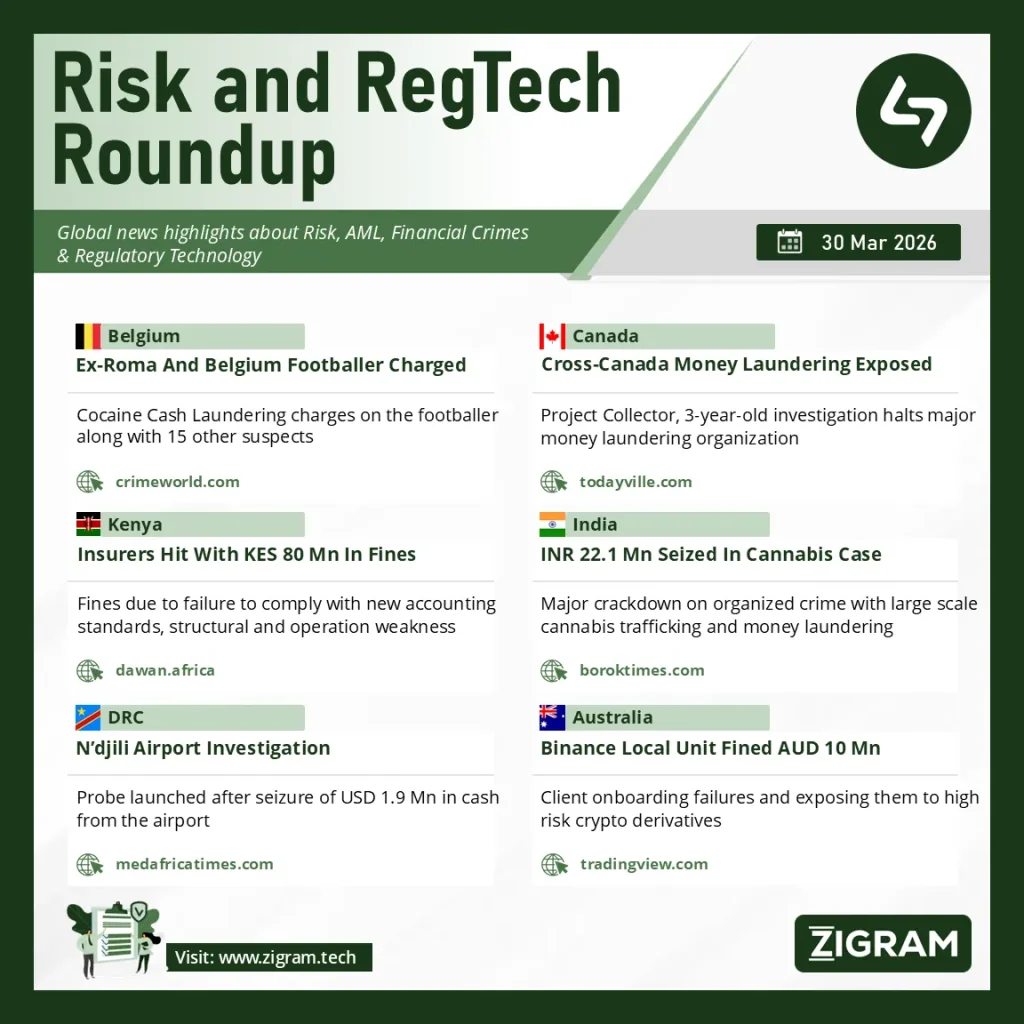
Ex-Roma and Belgian Footballer Faces Cocaine & Money Laundering Charges
The article reports on a high-profile investigation involving former Belgian international footballer Radja Nainggolan, who has been linked to a broader cocaine trafficking network in Europe. Authorities conducted extensive raids, primarily around Antwerp and Brussels, targeting an organized criminal operation suspected of importing cocaine from South America into Europe. The investigation involves multiple suspects and focuses on the logistics and financial flows associated with drug distribution. Nainggolan was detained and questioned in connection with the case, particularly regarding his alleged financial dealings and possible links to individuals involved in the network. While he has faced suspicion of association with a criminal organization, reports indicate complexities around the exact charges, especially concerning money laundering. The case highlights the intersection of professional sports, organized crime, and financial investigations, emphasizing how illicit drug proceeds may be integrated into legitimate financial systems.
$16 Million Seized in Alberta–BC Money Laundering Operation
This report details a major Canadian law enforcement operation—Project Collector—that dismantled a sophisticated, nationwide money laundering network. Authorities arrested seven individuals across Calgary and Vancouver and placed over $16 million in bank accounts, real estate, and vehicles under restraint. The network allegedly facilitated financial transactions for some of Canada’s largest criminal organizations, particularly those linked to drug trafficking. Investigators uncovered that the group operated pseudo-banking systems, allowing criminals to transfer large sums across provinces while avoiding detection by traditional financial institutions. In just one year, approximately $24 million in cash movements were identified. The operation, which began in 2018 after a $1 million cash interception, relied heavily on financial intelligence from FINTRAC. Charges include participation in a criminal organization and laundering proceeds of crime, reflecting the scale and sophistication of modern laundering infrastructures tied to organized crime.
Kenyan Insurers Fined Over Sh80 Million Amid IFRS 17 Challenges
The article examines how Kenya’s insurance sector is grappling with the implementation of IFRS 17, a new global accounting standard that significantly alters how insurance contracts are reported. More than half of the country’s 56 insurers were penalized, collectively paying over Sh80 million in fines due to delays and non-compliance in financial reporting. The transition has exposed major structural weaknesses, including poor data quality, outdated IT systems, and insufficient actuarial capacity. At least 33 insurers missed reporting deadlines, disrupting regulatory timelines and delaying industry-wide financial disclosures. Additionally, some firms were fined for failing to meet anti-money laundering compliance requirements, particularly the lack of independent audits of AML programs. While IFRS 17 aims to enhance transparency and comparability, the transition has proven costly and operationally challenging, especially for smaller insurers, potentially leading to market consolidation as weaker firms struggle to adapt.
ED Attaches ₹2.21 Crore Assets in Tripura Cannabis Case
This article highlights enforcement action by India’s Enforcement Directorate (ED) in a money laundering case linked to large-scale cannabis trafficking in Tripura. Authorities attached movable and immovable assets worth ₹2.21 crore under the Prevention of Money Laundering Act (PMLA), targeting individuals allegedly involved in an organized drug network. The investigation was triggered by multiple FIRs and significant seizures of cannabis, including consignments exceeding several thousand kilograms. The accused reportedly sourced cannabis locally and distributed it across states such as West Bengal and Bihar. The proceeds of crime were primarily generated in cash and routed through hawala channels before being deposited into bank accounts and invested in assets like real estate, vehicles, and businesses. Investigators also uncovered attempts to legitimize illicit income through fabricated financial records. The case underscores the ED’s focus on dismantling the financial backbone of narcotics trafficking networks in India.
DRC Launches Probe After $1.9M Seizure at Kinshasa Airport
Authorities in the Democratic Republic of Congo (DRC) have launched an investigation following the seizure of approximately $1.9 million at Kinshasa’s international airport. The funds were reportedly discovered during routine checks, raising suspicions of illicit financial activity, including potential money laundering or cross-border smuggling. The incident has triggered a broader probe to identify the origin of the funds, the individuals involved, and whether the money is linked to organized crime or corruption networks. Officials are examining compliance with currency declaration regulations and international financial controls. The case reflects ongoing challenges faced by African nations in monitoring illicit financial flows through airports and border points, particularly where weak enforcement or systemic vulnerabilities exist. It also highlights the importance of strengthening AML frameworks, cross-border cooperation, and financial intelligence capabilities to detect and prevent illegal movement of large sums of cash.
Australia Fines Binance Unit $6.9M Over Onboarding Failures
This article reports that Australian regulators have fined a local Binance entity $6.9 million for deficiencies in its client onboarding and compliance processes. The penalty stems from failures in properly classifying retail investors and ensuring appropriate consumer protections, raising concerns about gaps in anti-money laundering and counter-terrorism financing controls. Regulators found that the platform did not adequately assess customer profiles, which could expose the financial system to misuse. The case highlights increasing global scrutiny of cryptocurrency exchanges, particularly regarding KYC (Know Your Customer) and AML compliance. Authorities emphasized that financial service providers must implement robust onboarding procedures to prevent misuse by illicit actors. The fine serves as a warning to the broader crypto industry, reinforcing the need for stricter regulatory adherence and stronger compliance frameworks in rapidly evolving digital asset markets.
Stay informed with our weekly digest, bringing you the most impactful news from around the globe. Thank you for reading!
Subscribe to our weekly Newsletter – Click Here
Empower your organization with ZIGRAM’s integrated RegTech solutions – Book a Demo
- #AML
- #AntiMoneyLaundering
- #FinancialCrime
- #RegulatoryEnforcement
- #CryptoRegulation
- #Binance
- #DrugTrafficking
- #AssetSeizure
- #EnforcementDirectorate
- #IFRS17
- #InsuranceSector
- #KYC
- #RegulatoryAction
- #GlobalFinance
- #IllicitFinance
- #FraudPrevention
- #AMLCompliance
- #RiskManagement
- #FinancialRegulation
- #EconomicCrime